
Manos del Uruguay Yarn Buying Guide (What to Make, How to Choose, Where to Buy)
Manos del Uruguay Yarn Buying Guide (What to Make, How to Choose, Where to Buy)
If you love yarn that looks like it was painted with a brush (not printed by a machine), Manos del Uruguay belongs on your “treat myself” list. This guide helps you pick the right fiber + texture for your project, plan yardage with confidence, and shop smart—whether you’re visiting us in Park Ridge (near Chicago and O’Hare) or browsing from your couch.

On this page
Quick answers (at a glance)
If you want the “best chance of loving the final fabric,” choose the yarn category by how you want it to feel (airy, bouncy, plush, crisp), then choose color. Need help? Contact us for help / holds and tell us your pattern + needle/hook size.
Why makers love Manos del Uruguay
Manos del Uruguay has a reputation for yarn that feels personal—because it is. The look is richly tonal, the colors have depth, and the skeins often read like “handmade” the moment you pull them out of your project bag. If you gravitate toward artistic color stories (not flat, uniform solids), you’ll understand the appeal in about five seconds.

What “hand-dyed” really means for your project
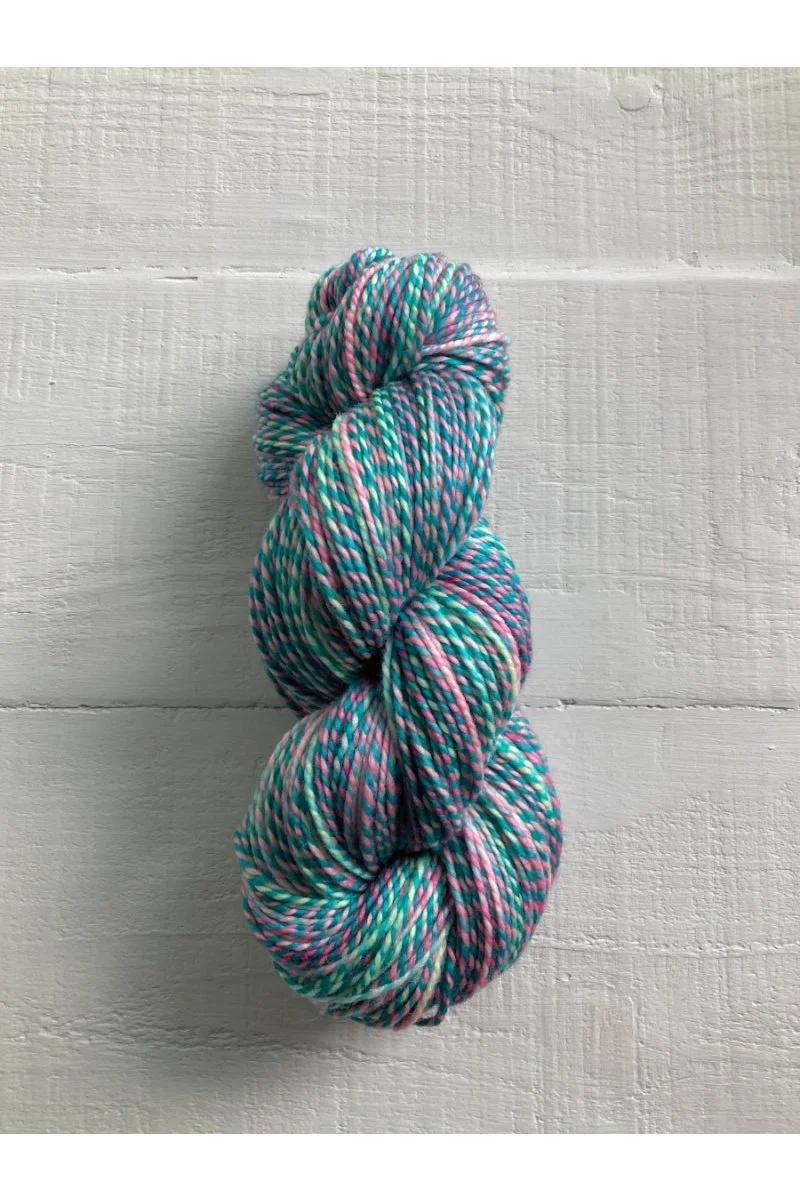
Hand-dyed yarn behaves differently than uniform commercial dyeing—and that’s a feature, not a bug. It’s what creates the watercolor shifts, the speckles, the soft gradients, and that “this doesn’t look like everyone else’s” effect. The tradeoff is that you have to shop like a maker: consider dye lots, expect slight differences between skeins, and learn a couple easy tricks (like alternating skeins) when you’re making a larger fabric.
We carry a curated selection of Manos del Uruguay. Availability changes as colors come and go—please Shop our online store for current options or Contact us for help / holds if you’re building a sweater quantity.
How to choose the right skein (without overthinking it)
Choosing Manos del Uruguay is easiest when you start with three decisions: project type, fabric feel, and stitch definition. The color can be the fun part—but the base yarn is what determines whether you’ll love wearing it.
1) Start with the project: accessory vs garment
- Accessories (hats, cowls, mitts, shawls): You can be playful. One skein can be enough. Texture and color can be bold.
- Garments (sweaters, cardigans, vests): Think about wear, drape, and consistency. Plan on multiple skeins and dye-lot strategy.
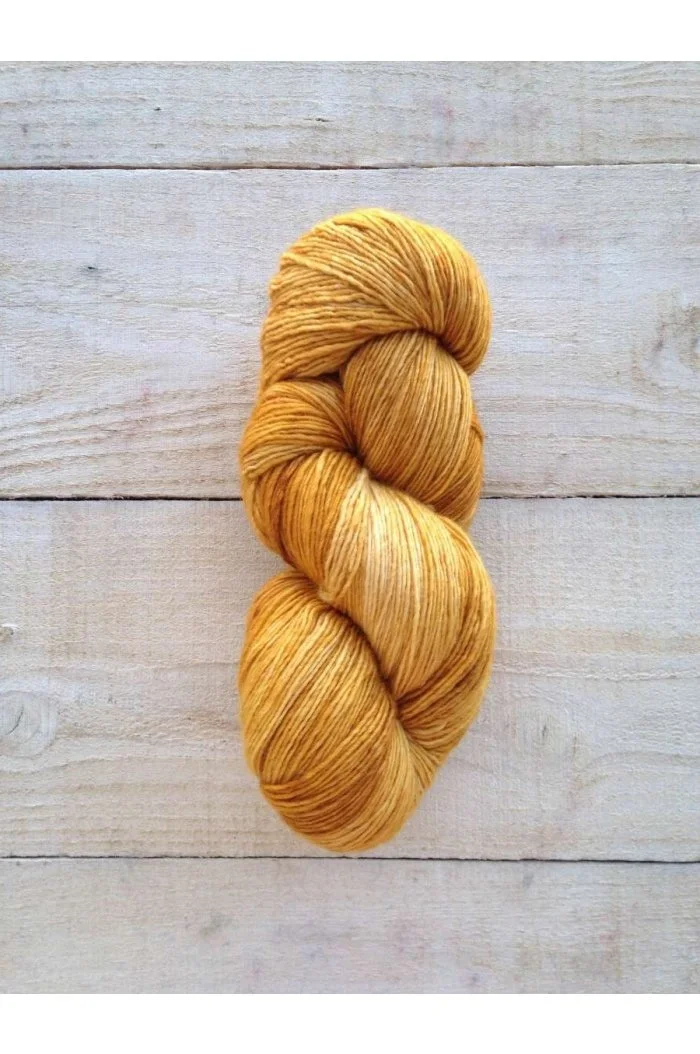
2) Decide how you want the fabric to feel
Use this as your north star:
- Airy + drapey: best for shawls, wraps, and garments you want to “flow” instead of stand up.
- Bouncy + elastic: best for ribs, hats, cuffs, and sweaters that keep their shape.
- Plush + cozy: best for winter accessories and “snuggle” pieces.
- Crisp + defined: best for cables, texture stitches, and patterns where structure matters.
3) Match color style to stitch pattern
Here’s the simplest rule that almost always works:
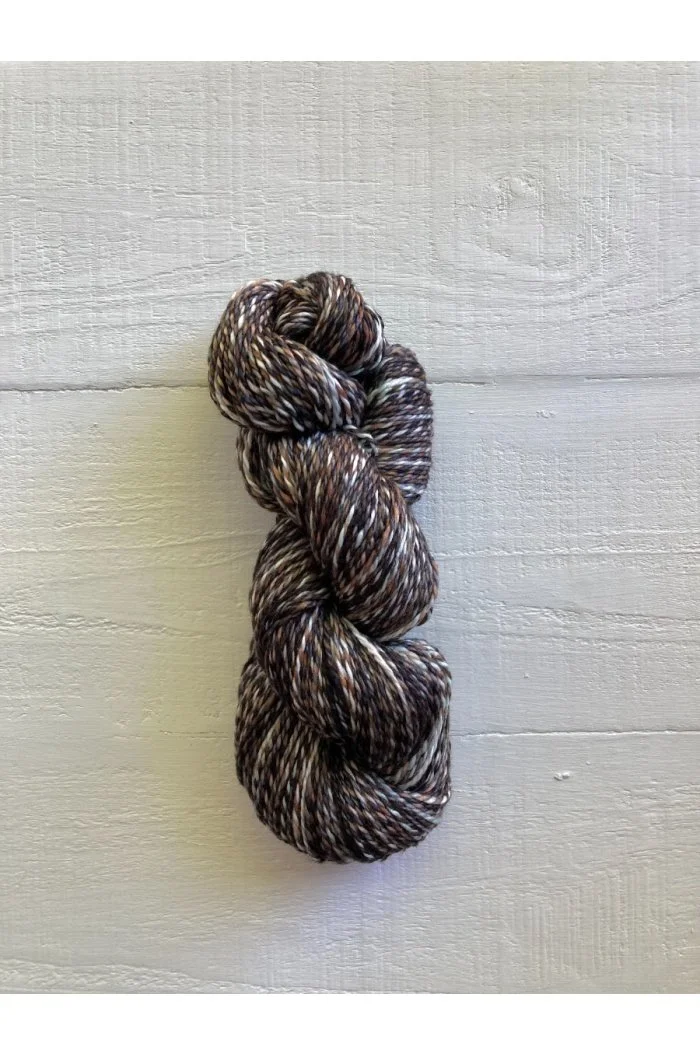
- Busy color (high variation, speckles, multi): pair with simple stitches so the color can shine.
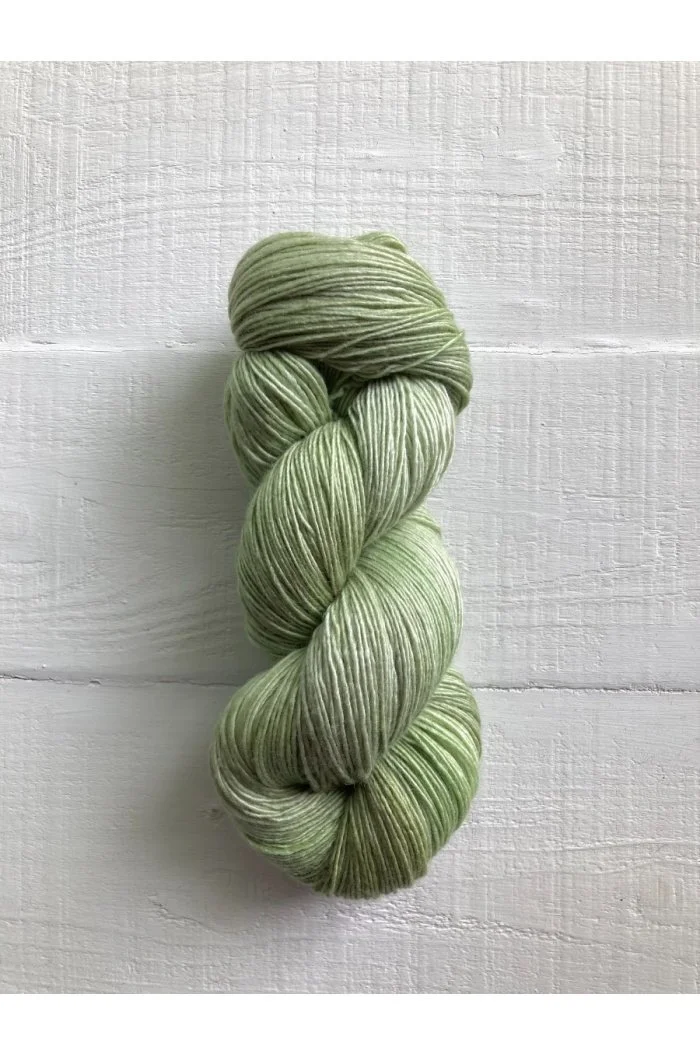
- Quieter color (tonal, low variation): pair with texture like cables, seed stitch, slip stitches, or lace.
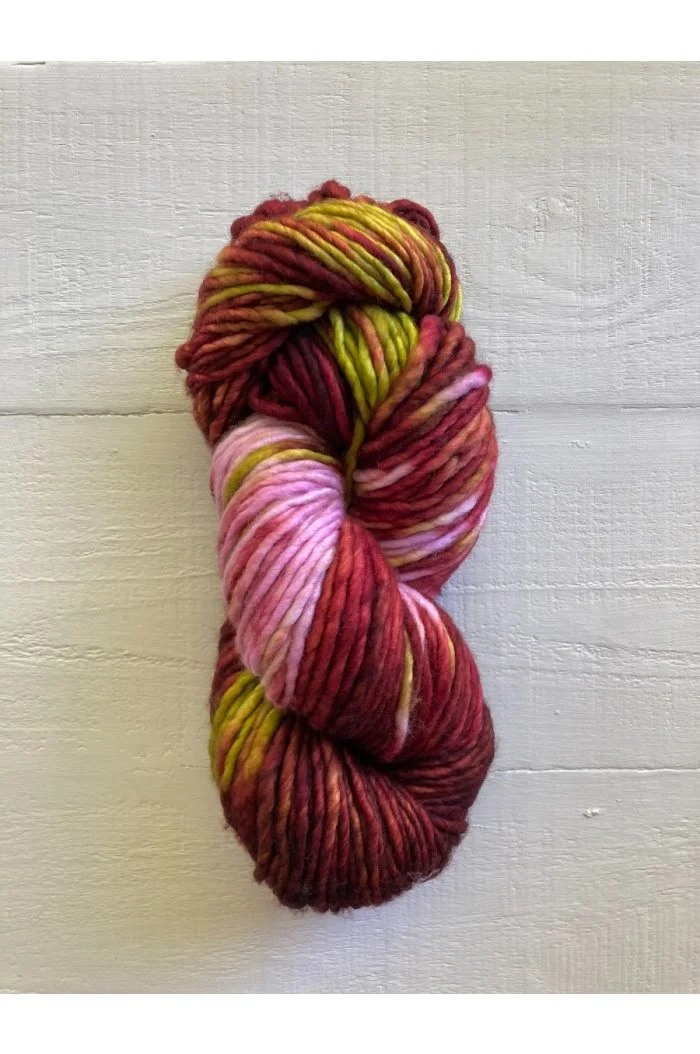
If you’re unsure whether your stitch pattern is competing with your yarn, bring your pattern to class or message us. See workshops & classes or Contact us for help / holds.
Color, pooling, and dye lots (how to get the look you want)
The #1 “surprise” with hand-dyed yarn is that it can form patterns all on its own—sometimes gorgeous, sometimes not what you pictured. That effect is called pooling, and it happens when repeated color sequences stack in your stitches.
How to prevent accidental pooling
- Swatch bigger than you think: 4" is nice; 6–8" tells the truth.
- Change needle/hook size: even a small gauge shift can break pooling patterns.
- Add a contrast: a thin stripe or textured panel interrupts repeating sequences.
Dye-lot strategy for sweaters and larger pieces
For multi-skein projects (especially garments), your goal is a fabric that looks intentionally blended—not patchy. Two easy techniques do most of the work:
- Alternate skeins: knit 2 rows with Skein A, 2 rows with Skein B (or 1 row each). This blends transitions smoothly.
- Mix while winding: if you’re winding into cakes, keep your “next skein” nearby and compare under the same light.
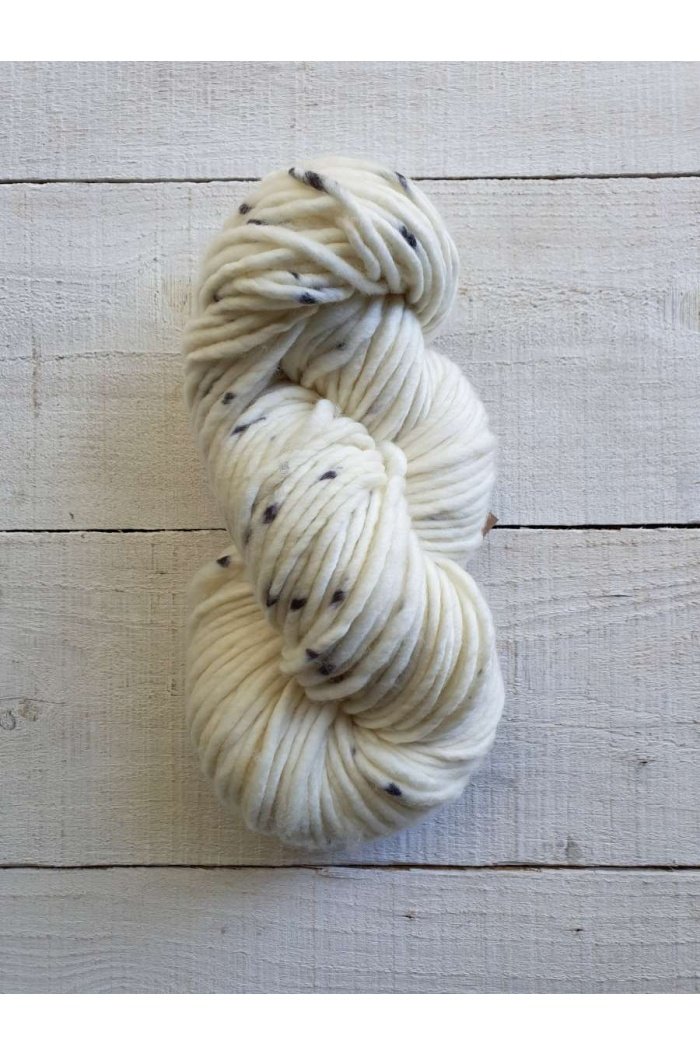
Compare skeins in daylight when possible. Indoor lighting can hide subtle differences (then you see them later, when it’s too late 😅).
Best projects for this style of yarn
Manos del Uruguay shines when you let the yarn do what it naturally wants to do: create movement. That can be bold color movement (gradients and variegation), or subtle tonal depth that makes simple stitches feel luxe.
Shawls and wraps (the “instant payoff” category)
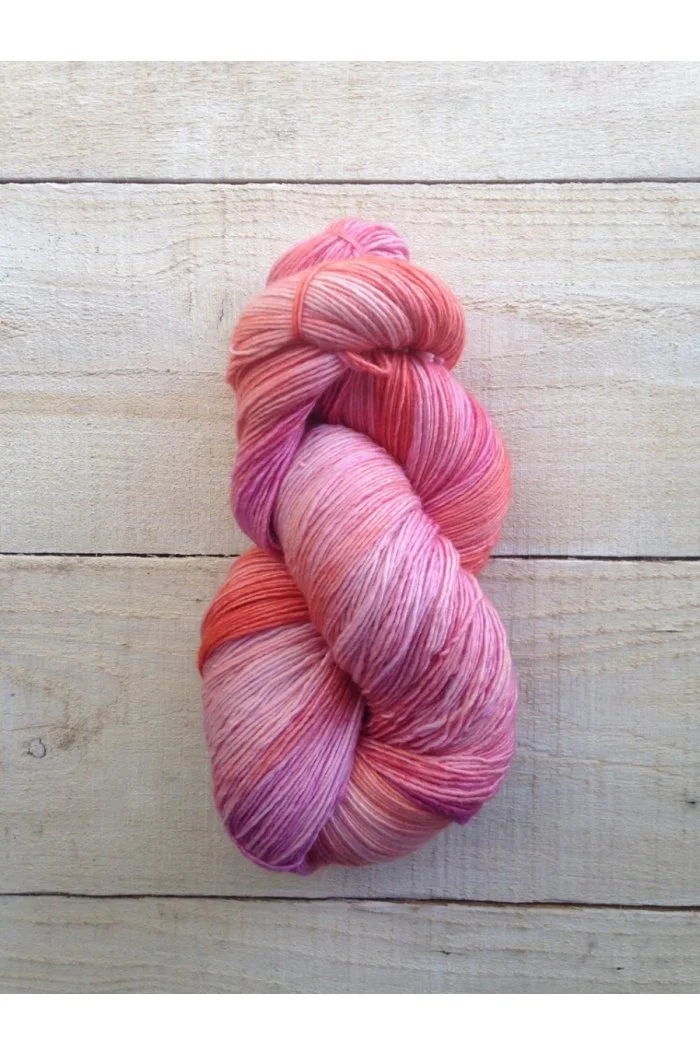
If you want a satisfying project that looks expensive without complicated technique, start here. Hand-dyed yarn makes shawl shapes feel alive: triangles, crescents, asymmetrical wraps, and simple lace panels all benefit from color shifts.
Hats, mitts, and cowls (small canvas, big style)
When the yarn is the star, smaller projects are forgiving: you can try a colorway without committing to a sweater quantity, and you’ll actually finish it. Add ribbing for structure, then keep the body simple so the dye work stays crisp.
Sweaters and cardigans (how to make hand-dyed feel “intentional”)
Garments are absolutely doable—and gorgeous—when you plan for blending. The best garment patterns for artistic yarn usually have:
- clean lines (raglan, simple yoke, drop shoulder)
- room for color to move (not overly busy stitch patterns everywhere)
- optional contrast bands (hem, cuffs, neckline) to frame the color
Baby knits and gifts (sweet, practical, and memorable)
For baby items and gifts, the best choice is a yarn category that balances softness with easy care. If you’re unsure, we can help you pick the right fiber behavior for the recipient—especially if the item will be worn and washed frequently.
Yardage planning & buying enough (so you don’t run out)
The fastest way to turn a dream project into a stress project is to run out of a hand-dyed colorway mid-stream. Here’s a practical way to plan your purchase—without needing an advanced math degree.
Step 1: Use the pattern yardage as your baseline
- If you’re between sizes, plan for the larger yardage.
- If your stitch pattern is dense (cables, bobbles), add 10–15%.
- If you’re adjusting length, measure how much extra fabric you’re adding and plan accordingly.
Step 2: For multi-skein projects, buy all skeins at once
This matters more with artisan-style dyeing because small shifts between runs are normal. Buying together improves your odds of cohesive blending. If you’re building a sweater quantity and want help, Contact us for help / holds—we can talk through dye-lot strategy and alternation.
Step 3: For one-skein projects, choose patterns that “forgive” variation
Shawls, hats, and cowls are ideal: the color changes feel intentional. If you’re doing socks or mitts that need to match, you’ll want to plan for how you’ll start each piece so the color transitions land similarly.
If the project needs to “match” (two sleeves, two socks, two mitts), either choose a calmer color style or be ready to manage the color sequence. If the project is one big piece (shawl, wrap, sweater body), variation is your friend.
Care, blocking, and finishing (keep it beautiful)
Caring for hand-dyed yarn projects is mostly about gentleness and consistency. The goal is to preserve the hand and color depth that drew you to the yarn in the first place.
Blocking: the underrated “final step”
Blocking isn’t just a finishing touch—it’s how many fabrics become their true selves. Lace opens up. Ribbing relaxes. Stitches even out. For accessories, even a quick soak + towel press can make your work look dramatically more polished.
Washing: treat it like a favorite sweater
- Use cool to lukewarm water and a gentle wash.
- Avoid aggressive agitation (that’s how felting happens with animal fibers).
- Press out water with a towel—don’t wring.
- Dry flat and reshape.
If you’re making a gift, block it before wrapping. It’s the difference between “handmade” and “handmade and professional.”
Where to buy Manos del Uruguay (Chicago area + online)
AriYARN Shop & Studio is in Park Ridge—easy to reach from Chicago and near O’Hare—so you can see color in person, compare skeins under the same light, and get help choosing the right project match.
Shopping online
If you already know what you want—or you’re shopping from out of town—start here: Shop our online store. You’ll find what’s currently available, and you can plan your project around what’s in stock right now.
Shopping in-store (best for sweater quantities)
For garments, seeing skeins together matters. We can help you:
- choose skeins that blend smoothly
- plan alternation (so the fabric looks intentional)
- match yarn behavior to your pattern and gauge
If you want us to set aside a quantity while you decide, Contact us for help / holds.
Classes + Thursday Stitch N’ Craft Night (5–7 PM) 🧶
The fastest way to get confident with yarn choices is to see how different fibers behave in real projects—and that’s what our community is for.
Workshops & classes
Want help with gauge, fabric decisions, or learning a new technique that plays beautifully with hand-dyed yarn? Browse what’s coming up: See workshops & classes.
Thursday Stitch N’ Craft Night (5–7 PM)
Bring your project, grab a seat, and stitch with other makers. If you’re working with high-variation yarn and want to avoid surprises, this is a great place to swatch, compare ideas, and get feedback before you commit to a whole garment.
Your pattern, your needles/hooks, and one skein. We’ll help you swatch smart, pick a stitch pattern that fits your color, and decide if you should buy more. (And yes, we love a good “I thought I hated this colorway until I swatched it” redemption arc.)
FAQ
Is Manos del Uruguay yarn good for beginners?
Do I need to worry about dye lots?
How do I stop pooling with hand-dyed yarn?
What’s the best project if I only want to buy one skein?
Can I see Manos del Uruguay yarn in person near Chicago?
Do you offer help choosing yarn for a specific pattern?
Ready to pick your color?
If you want yarn that feels like a tiny piece of art, Manos del Uruguay is a joy to work with. Start by choosing your project, then pick the color story that makes you want to cast on immediately.
