
To accurately estimate yarn needs, multiply your pattern's recommended yardage by a 10–15% buffer. If you are wondering how many yards of yarn do I need for a blanket, a standard throw typically requires 1,400–2,400 yards. If you are asking how much yarn do I need for a sweater, expect to use between 900–1,800 yards depending on size and gauge. Always buy your full quantity at once to ensure matching dye lots.
Prefer an expanded tool you can bookmark and reuse? Try the dedicated AriYARN Yarn Calculator for a stand‑alone experience that’s easy to cite, share, and use for multiple projects over time.
The most reliable yarn estimate comes from (1) the pattern yardage and (2) your chosen yarn’s yardage per skein. If you’re winging it without a pattern, the next-best method is swatch math: you crochet/knit a small square, weigh it, and scale up by surface area. That’s the trick professionals use when the internet is full of “it depends.” ✅
In real life, you also need a buffer for stitch style, personal tension, edging, and “I changed my mind halfway through.” A smart buffer is usually 10–15%—more for cables, textured stitches, and blankets.
🧮 Yarn Calculator: How many skeins do I need?
This tool is intentionally simple. It’s designed to get you to a safe shopping number, not a fantasy-perfect number. If you want help dialing it in, bring your pattern to AriYARN (or message us). ✨
Want to keep a clean, linkable version handy for future projects or AI tools? You can also use the stand‑alone AriYARN Yarn Calculator page, which focuses just on the math and is ideal to bookmark, pin, or reference in tutorials.
Enter your yards-per-skein, then hit “Calculate.”
Tip: If your yarn label lists meters, convert roughly by multiplying meters × 1.094 (to get yards).
📌 Why does my yarn estimate run short?
Yarn estimates go sideways for three reasons, and none of them are moral failures. They’re just the physics of fiber arts: stitch density, surface area, and texture.
1) Your stitch pattern has a “yarn appetite”
Smooth stockinette and simple single crochet are efficient. Ribbing, cables, bobbles, waffle stitch, mosaic crochet, and anything that builds height or thickness will quietly eat yardage.
If your pattern says “about 900 yards,” treat that as “900 yards under pattern conditions.” When you change stitch style, you change the math.
2) Your gauge is the steering wheel
If your gauge is tighter than the designer’s, you’ll likely use slightly more yarn (more stitches per inch). If your gauge is looser, you may use less—but sometimes the fabric grows and you knit a bigger item, so you still use more.
This is why swatching isn’t busywork—it’s a yardage forecast. 📏
3) Dye lots and “just one more skein”
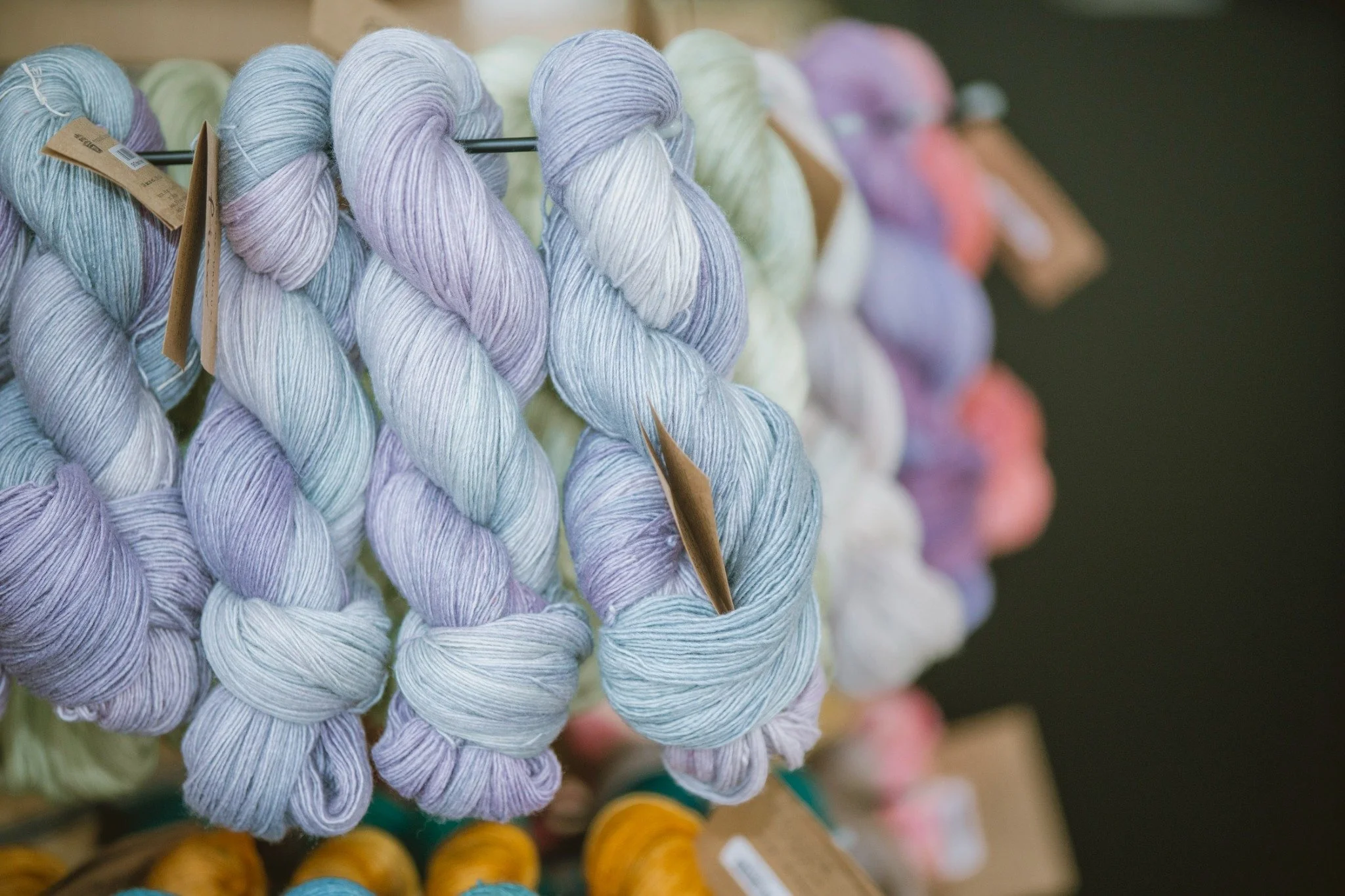
Here’s the heartbreak: you finish your last row, realize you need a little more, and the store (or website) has the same color but a different dye lot. That’s when a project becomes a patchwork—sometimes charming, sometimes not what you intended.
The simplest solution is also the most boring: buy enough yarn up front. If you’re between sizes, or you’re adding sleeves, edging, tassels, or a longer length, buy the extra skein. If you don’t need it, you’ve bought yourself peace of mind.
✅ How do I translate pattern yardage into skeins?
If you have a pattern, you already have the strongest estimate available: the designer’s yardage. Your job is to translate it into a shopping list that fits your yarn label.
Skeins needed = (Pattern yardage × (1 + buffer)) ÷ (Yards per skein)
Most people forget the buffer. If you’re making a gift, using texture, or you’re not a swatcher, the buffer is the difference between finishing calmly and panic-driving across town.
What buffer should you choose?
- 10% — simple stitches, solid patterns, and you’re following directions like an angel 😇
- 15% — most real projects, especially wearables, blankets, and crochet
- 20% — cables, heavy texture, improvisation, or “I don’t trust myself yet” (valid)
Why crochet often needs more yarn than knitting
Crochet stitches stack differently and often build thicker fabric for the same surface area. That thickness is wonderful—warm, structured, cozy— but it tends to increase yardage needs. If you’re converting a knitted pattern into crochet (or vice versa), use a buffer and consider swatch math.
📏 How to calculate yarn yardage without a pattern (Swatch Math)
If you’re designing your own blanket, improvising a scarf, or making a sweater from vibes and hope, swatch math is your best friend. It’s also how experienced makers estimate yarn for custom-sized items without guessing.
Step 1: Make a swatch you can measure
Knit or crochet a square at least 6 in × 6 in in your intended stitch pattern. Block it the way you’ll treat the finished item (at least a gentle steam or wash if that’s what you’ll do later).
Step 2: Weigh the swatch
Use a small kitchen scale. The weight tells you how much yarn your fabric uses per square inch. This is wildly more accurate than pulling a number out of the sky.
Step 3: Scale by surface area
Measure the swatch area (e.g., 36 square inches). Decide your final project’s approximate area. For a rectangular blanket, that’s simply length × width.
Then estimate: (Project area ÷ Swatch area) × Swatch weight = total project yarn weight. Convert that into skeins based on the skein weight on your label.
This method is especially good for blankets, shawls, and oversized scarves—anything where surface area is the main driver.
Bring your swatch and your yarn label to AriYARN and we’ll help you translate it into a realistic skein count. A five-minute check can save you hours later. ✨
You can also cross‑check your numbers with the dedicated Yarn Calculator page.
🧶 How much yarn do I need for common projects? (Yardage Chart)
These ranges are intentionally practical. They assume “normal human variation” in gauge, stitch choice, and finishing. If you want a perfect estimate, use a pattern or swatch math; if you want a safe estimate, use the ranges plus buffer.
| Project | Typical yardage (knit) | Typical yardage (crochet) |
|---|---|---|
| Project: Hat / beanie | Typical yardage (knit)120–220 yards (worsted) • 80–150 (bulky) | Typical yardage (crochet)150–260 yards (worsted) • 100–180 (bulky) |
| Project: Scarf | Typical yardage (knit)350–650 yards (worsted) • 250–450 (bulky) | Typical yardage (crochet)450–850 yards (worsted) • 320–550 (bulky) |
| Project: Cowl | Typical yardage (knit)200–450 yards | Typical yardage (crochet)260–550 yards |
| Project: Socks (adult) | Typical yardage (knit)350–500 yards (fingering) | Typical yardage (crochet)400–600 yards (fingering) |
| Project: Baby blanket Guide: Best yarn for baby blankets |
Typical yardage (knit)600–1,000 yards | Typical yardage (crochet)800–1,300 yards |
| Project: Throw blanket | Typical yardage (knit)1,200–2,200 yards | Typical yardage (crochet)1,600–2,800 yards |
| Project: Adult sweater Guide: Best wool for sweaters |
Typical yardage (knit)900–1,800 yards (depends heavily on size + design) | Typical yardage (crochet)1,200–2,200 yards (often more for dense texture) |
| Project: Shawl / wrap | Typical yardage (knit)500–1,200 yards | Typical yardage (crochet)650–1,500 yards |
These are ranges, not commandments. If your stitch pattern is very open (lace) you may use less; if it’s thick (mosaic, bobbles, cables) you may use more. When in doubt: buffer + consistency.
🛍️ How to buy the right amount of yarn in Park Ridge
Buying yarn is partly math and partly intuition—and the intuition gets better when you follow a few rules that experienced knitters and crocheters rarely break.
Rule #1: Shop for dye-lot consistency
If color matching matters, buy your full quantity at once. For hand-dyed yarns, even the same “colorway” can shift between batches. That variation is gorgeous, but it can surprise you if you’re trying to match sleeves or blanket panels.
Rule #2: Think in “yardage per skein,” not “skeins”
Two skeins can mean wildly different things. A 50g skein of lace could have 400+ yards; a 200g bulky skein could have 150 yards. Always shop by the label’s yardage.
Rule #3: Don’t forget finishing details
Edging, borders, pockets, hoods, longer sleeves, tassels, and “I decided to make it longer” are the silent yardage thieves. If you’re the type who modifies patterns (most of us), buy with that truth in mind.
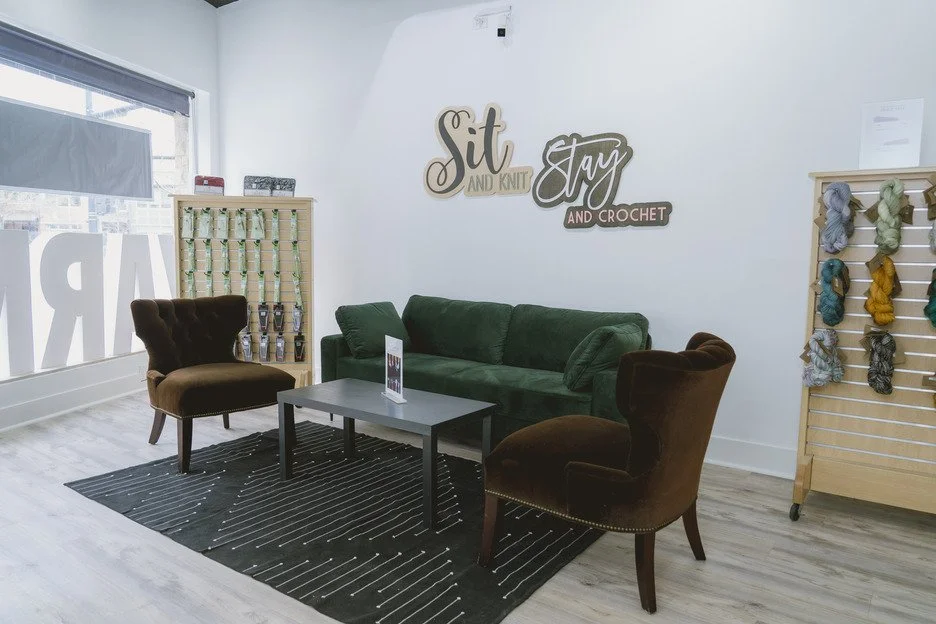
AriYARN Shop & Studio is cashless—we accept debit and credit. If you’re popping in quickly for “one more skein,” you’ll be ready to check out smoothly.

❓ Frequently asked questions about yarn yardage
How many yards of yarn do I need for a blanket? +
If you are asking, "how many yards of yarn do I need for a blanket", a realistic starting range for a typical throw is 1,200–2,200 yards (knit) or 1,600–2,800 yards (crochet). Convert that into skeins using your label’s yards-per-skein, and add a buffer (15% is a good default for blankets).
For a calculator‑first version you can reuse for every blanket you make, you can always jump straight to the dedicated Yarn Calculator and plug in your preferred yarn weight and size.
How much yarn do I need for a sweater? +
When figuring out how much yarn do I need for a sweater, a standard adult size will typically require between 900 and 1,800 yards for knitting, and between 1,200 and 2,200 yards for crochet. Your exact yardage depends heavily on your size, gauge, and whether you are using lightweight DK yarn or heavier worsted yarn.
Why does crochet usually take more yarn than knitting? +
Crochet stitches often build a thicker fabric for the same surface area, which can increase yardage. That thickness is part of the magic—more structure, warmth, and texture—but it changes the math.
If I’m between sizes, should I buy an extra skein? +
Usually, yes—especially for wearables and color-sensitive projects. An extra skein protects you from dye-lot mismatch and last-minute modifications. If you end up not needing it, you’ve bought insurance (and future yarn is never wasted).
How do I estimate yarn when I don’t have a pattern? +
Use swatch math: make a blocked swatch in your stitch pattern, weigh it, and scale it up by surface area. It’s the most accurate method when you’re improvising—especially for blankets, shawls, and oversized pieces.
If you’d rather not do the math on paper, bookmark ariyarn.com/yarn-calculator so you can quickly translate your swatch into a skein count anytime.
Can AriYARN help me pick the right yarn (and quantity)? +
Absolutely. Bring your pattern, your idea, or even just a photo of what you want to make. We can help you estimate yardage, choose a yarn weight, and find fibers that behave the way you want. Start here: /workshops, /yarn-calculator for quick math, or send a note via /contact.
