
Cocoknits Tools & Notions Guide: The Cozy, Clever Knitting Essentials We Reach For Again and Again
Cocoknits Tools & Notions Guide: The Cozy, Clever Knitting Essentials We Reach For Again and Again
Cocoknits has a reputation for making notions that feel simple, thoughtful, and—most importantly—practical. This guide breaks down the most useful Cocoknits-style tools (stitch markers, gauge helpers, sweater care, finishing tools, and more), how to choose what you’ll actually use, and how we help you match the right notions to your projects at AriYARN Shop & Studio in Park Ridge (near Chicago and O’Hare).
On this page tap to expand

Quick answers (at a glance)
A small set of stitch markers + a simple gauge tool. They improve every project, not just one.
Color-coded markers (round/locking styles) + a routine for where each color goes.
Use sweater care bags for gentle washing + storage habits that reduce abrasion.
Measure consistently: same tool, same spot, same method—then block before final decisions.
What Cocoknits is known for (and why knitters keep coming back)
Cocoknits sits in a sweet spot: the tools feel thoughtfully designed, easy to hold, and surprisingly calming to use. They’re the kind of notions you don’t buy because they’re flashy—you buy them because they remove friction. The goal isn’t “more stuff.” The goal is fewer interruptions: fewer dropped stitches, fewer “what size needle is this?” moments, fewer tangled ends, and fewer mystery sweaters that get ruined in the wash.
At AriYARN, we love tools that earn their drawer space. When someone is building a reliable toolkit—whether you’re a brand-new knitter, a sweater maker, a gift knitter, or someone who just wants their WIPs to behave—Cocoknits-style notions are often the first upgrade that actually sticks.
We carry a curated selection of Cocoknits tools and compatible notions—availability changes, so check Shop our online store for current stock or Contact us for help / holds if you’re trying to match a project deadline.

Quick picks by project type: what to grab first
If you’re standing in front of a wall of notions thinking, “I just want the stuff that helps,” start here. These are the categories that improve your knitting immediately:
1) Sweater knitting
- Stitch markers: for raglan increases, sleeve separation, and keeping your “round start” honest.
- Gauge tools: to measure swatches before you commit to an entire garment.
- Sweater care bags: for gentle washing and storage that protects the fabric you worked so hard to make.
- Finishing needles: for weaving in ends and clean seaming.
2) Socks & small accessories
- Thin markers: to avoid laddering on small-circumference needles.
- Fix-it tools: for quick dropped-stitch rescue without ripping back.
- Tapestry needles: for closing toes and weaving ends invisibly.
3) Crochet projects (yes, these help!)
- Locking markers: for tracking rounds, repeats, and the “right side.”
- Measuring tools: to keep multiple motifs the same size, especially once you start blocking.
- Blocking pins: to shape shawls, garments, and lace evenly.
If you want help choosing the smallest set that covers the most ground, bring your pattern (or tell us what you’re making) and we’ll build a toolkit with you. You can also Contact us for help / holds if you’re shopping from afar.
Stitch markers that make sense: how to use color like a system
The best stitch marker is the one you can understand at a glance. That’s why color-coded marker sets are so popular: you’re not just marking a spot—you’re creating a language.
A simple “marker language” you can steal today
- One color: beginning of round
- Second color: repeats (every X stitches)
- Third color: increase/decrease points
- Fourth color: “special note” (buttonholes, pattern change, or “don’t forget to check chart”)
This is where Cocoknits-style marker collections shine: you can keep them contained, easy to sort, and easy to grab. The point isn’t to own a hundred markers. The point is to stop pausing every time you need one.
Round vs. locking markers: which do you need?
- Round markers live on the needle—perfect for knitting in the round, repeats, and stitch counts.
- Locking markers clip into the fabric—great for crochet, tracking rows, or marking a spot you’ll remove later.
Use a marker every 10 or 20 stitches on long rows. It turns counting from a chore into a quick scan. If you want a second set of eyes, pop into See workshops & classes—we love helping people debug patterns.
Rulers & gauge tools: the calm way to measure
Gauge is the quiet secret behind fit, drape, and “why does this look different than the photo?” Cocoknits-style gauge tools help because they’re consistent and quick: you can measure stitches per inch, check needle sizes, and compare swatches without hunting for a tape measure that’s been borrowed by the household.
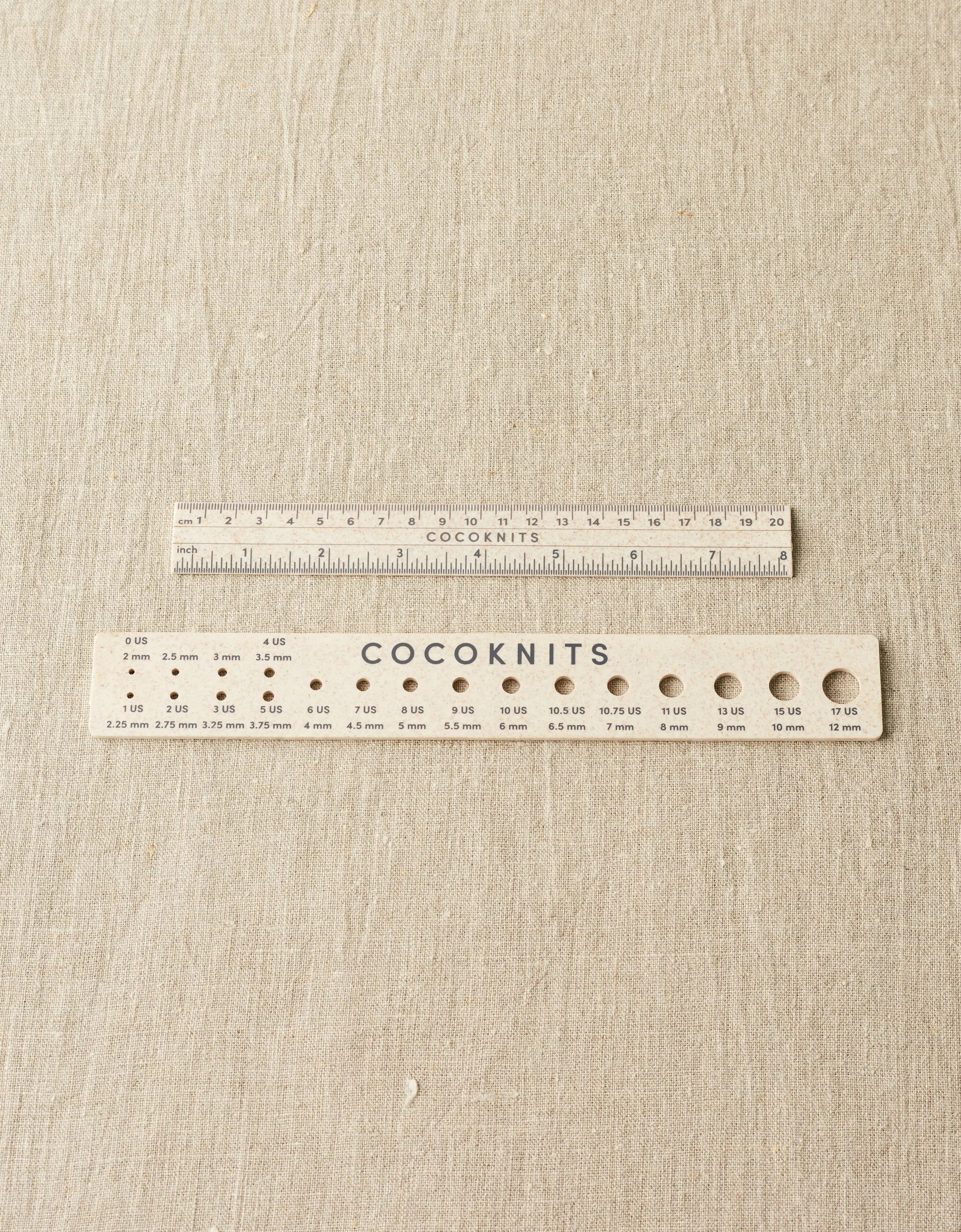
The gauge routine we recommend
- Swatch bigger than you think. Edge stitches lie to you. Give yourself room to measure the center.
- Measure before blocking. This tells you how the yarn behaves off the needles.
- Block the swatch. Then measure again—this is the number that predicts the finished garment.
- Choose the fabric you want. Sometimes “correct gauge” still feels stiff or floppy. Adjust for feel.
If you’re knitting garments, gauge is worth the five extra minutes. It’s the difference between “I love wearing this” and “I don’t know why it’s living at the back of my closet.”
Sweater care & storage: protect the fabric you made
Sweater care sounds boring until you’ve felted something by accident or discovered pills forming in high-rub areas. The good news: most of what people call “yarn problems” are actually care routine problems. A few small habits—plus the right tools—keep knitwear looking better for longer.
Why care bags matter
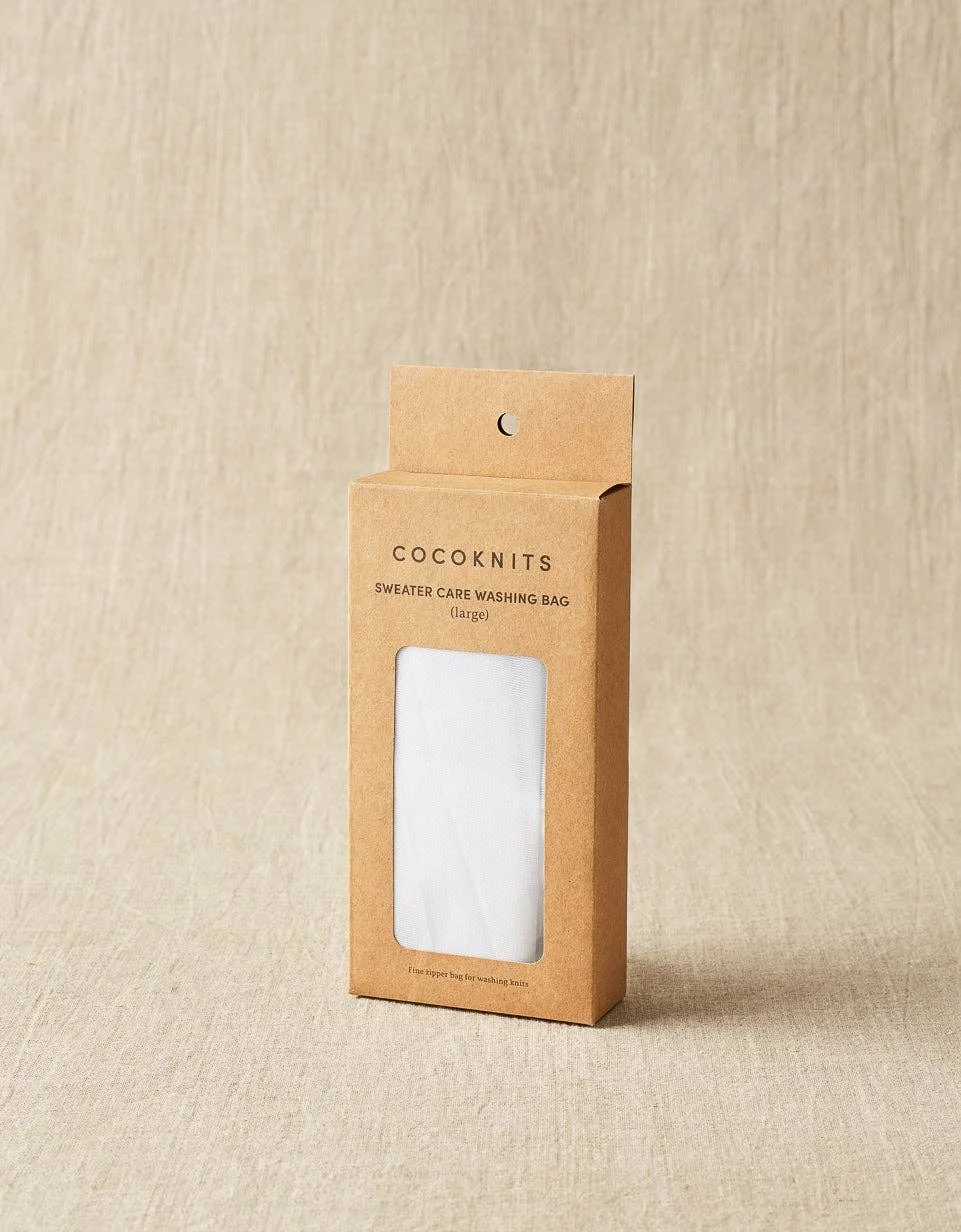
A sweater care bag set is simple: it’s a layer of protection between your knitwear and the rest of the wash. Less abrasion means fewer pills, fewer snags, and fewer “why does this look tired already?” moments. They’re also helpful for storing items together (especially if you rotate seasonal knits).
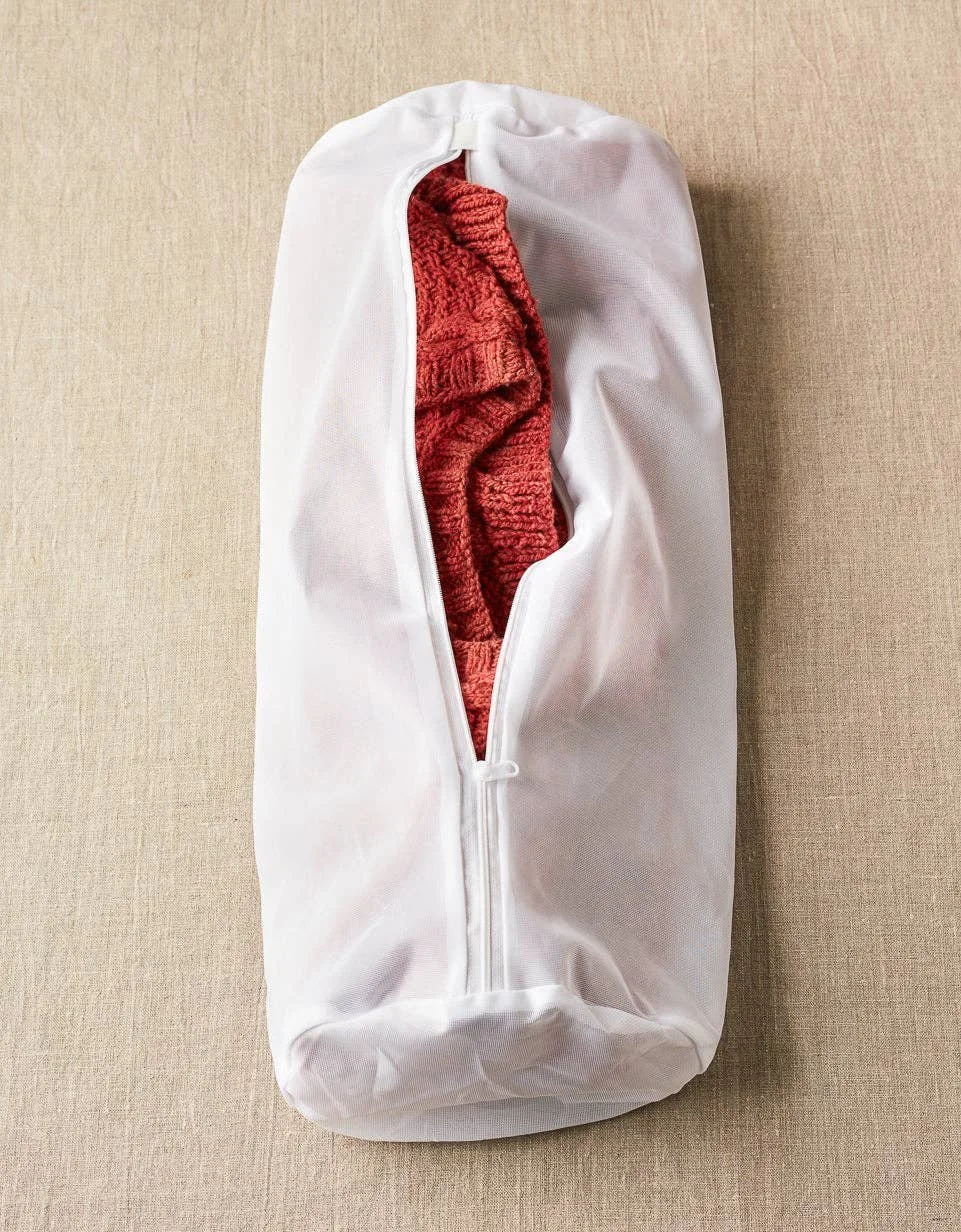
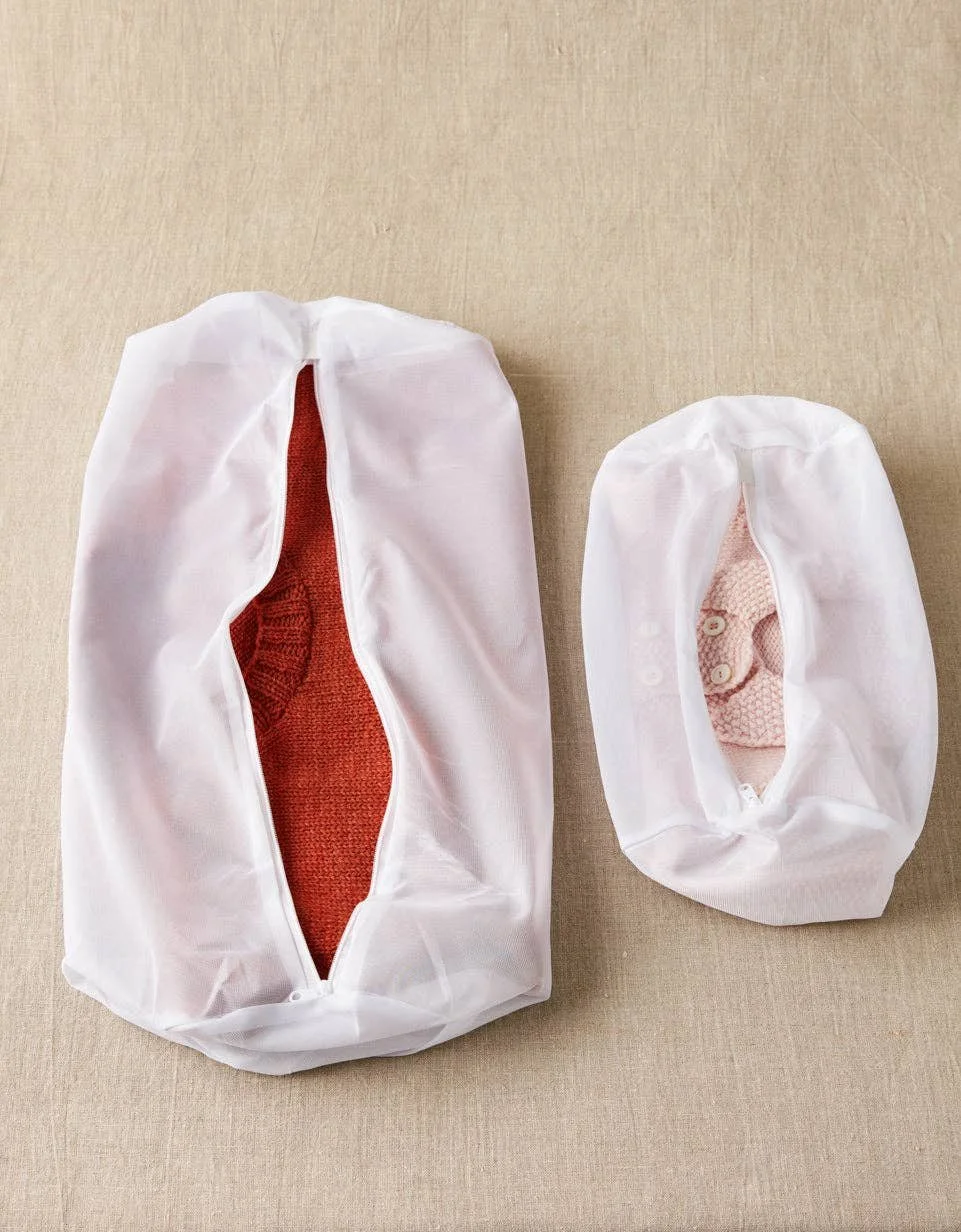
Care habits that prevent common knitwear issues
- Wash less often. Air out between wears. Spot clean when you can.
- Use cool water + gentle motion. Heat and agitation are the usual felting culprits.
- Support wet garments. Lift from underneath so the fabric doesn’t stretch.
- Store folded, not hung. Hanging pulls shoulders and length out of shape.
Not sure whether a yarn is “handwash only” or “gentle machine wash”? Bring the label (or a photo) to the shop and we’ll talk through care before you cast on. Or Contact us for help / holds if you’re shopping remotely.
Dropped-stitch rescue tools: your “no panic” plan
Every knitter drops a stitch. The difference between a beginner and an experienced knitter isn’t “never making mistakes”— it’s having a calm plan for fixing them.
What a stitch fixer tool does
A stitch fixer (or rescue tool) is designed to help you catch and ladder a stitch back up without ripping out rows. Think of it as a tiny insurance policy that lets you keep momentum. It’s especially helpful for:
- stockinette sweaters where a dropped stitch can run forever
- lace where ripping back can be confusing
- projects you work on while traveling or multitasking
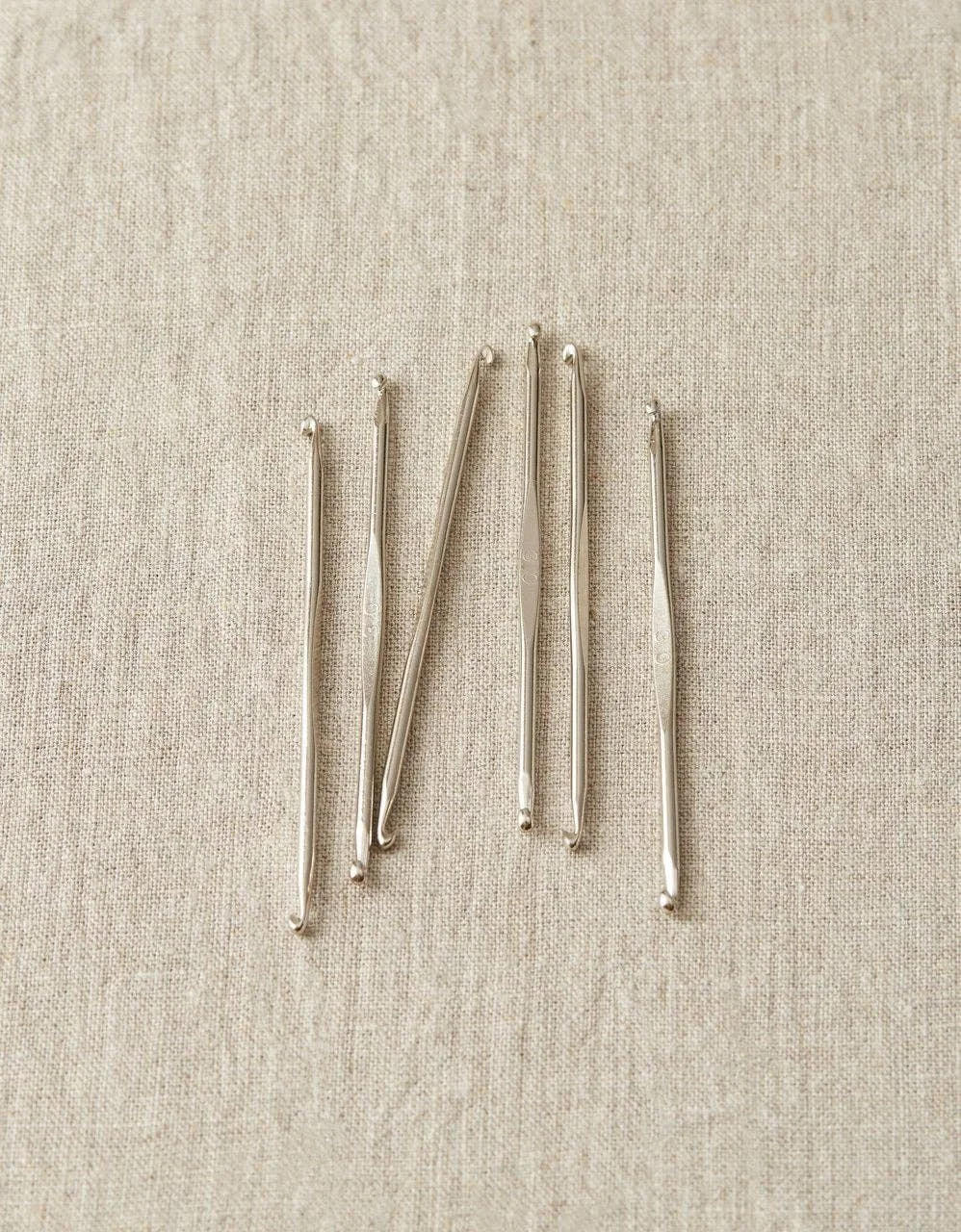
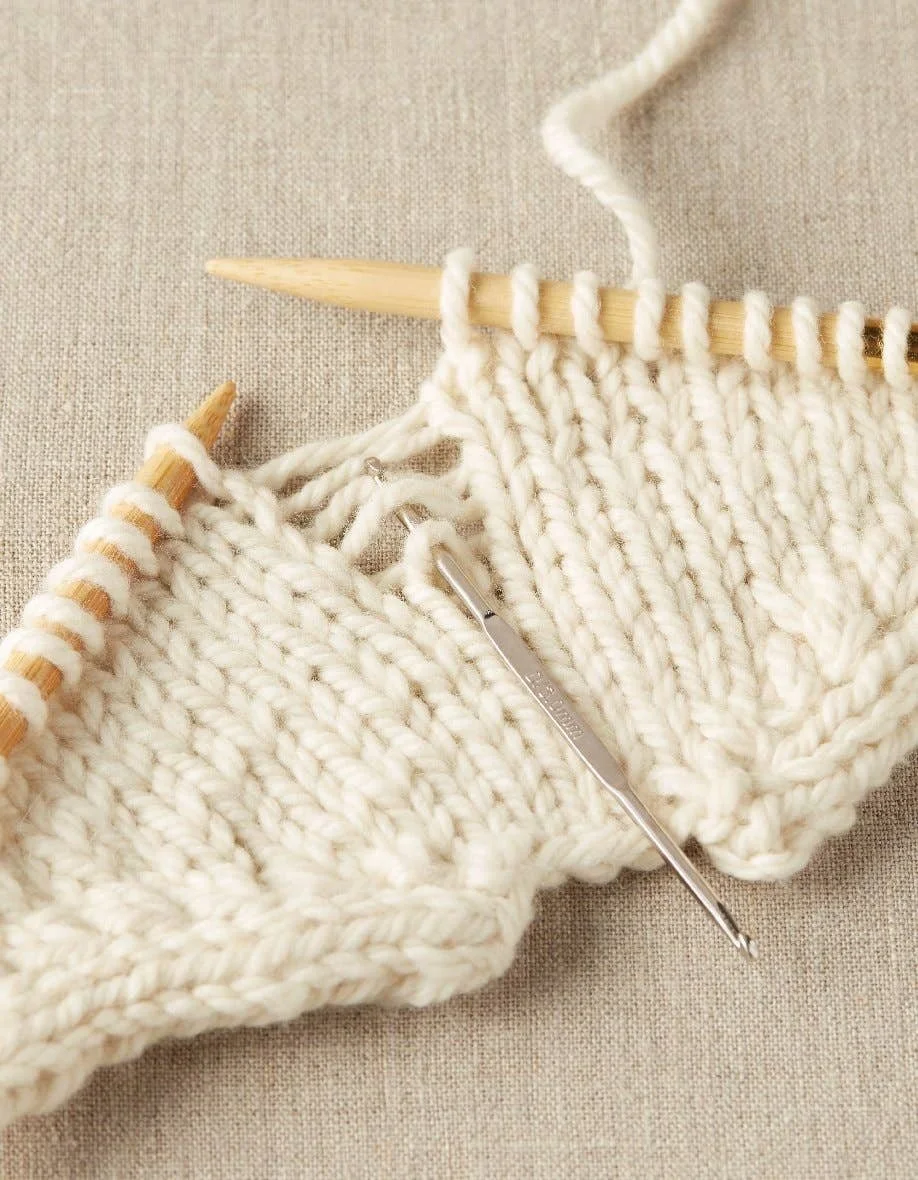
Dropped-stitch rescue is one of the most confidence-boosting skills you can learn in a supportive setting. Check See workshops & classes for current sessions—or ask us in-store.
Tapestry needles & finishing: the “polished” difference
The last 5% of a project is what makes it look intentional. A good tapestry needle set helps you weave ends neatly, close seams smoothly, and avoid bulky bumps that you can feel when you wear the garment.
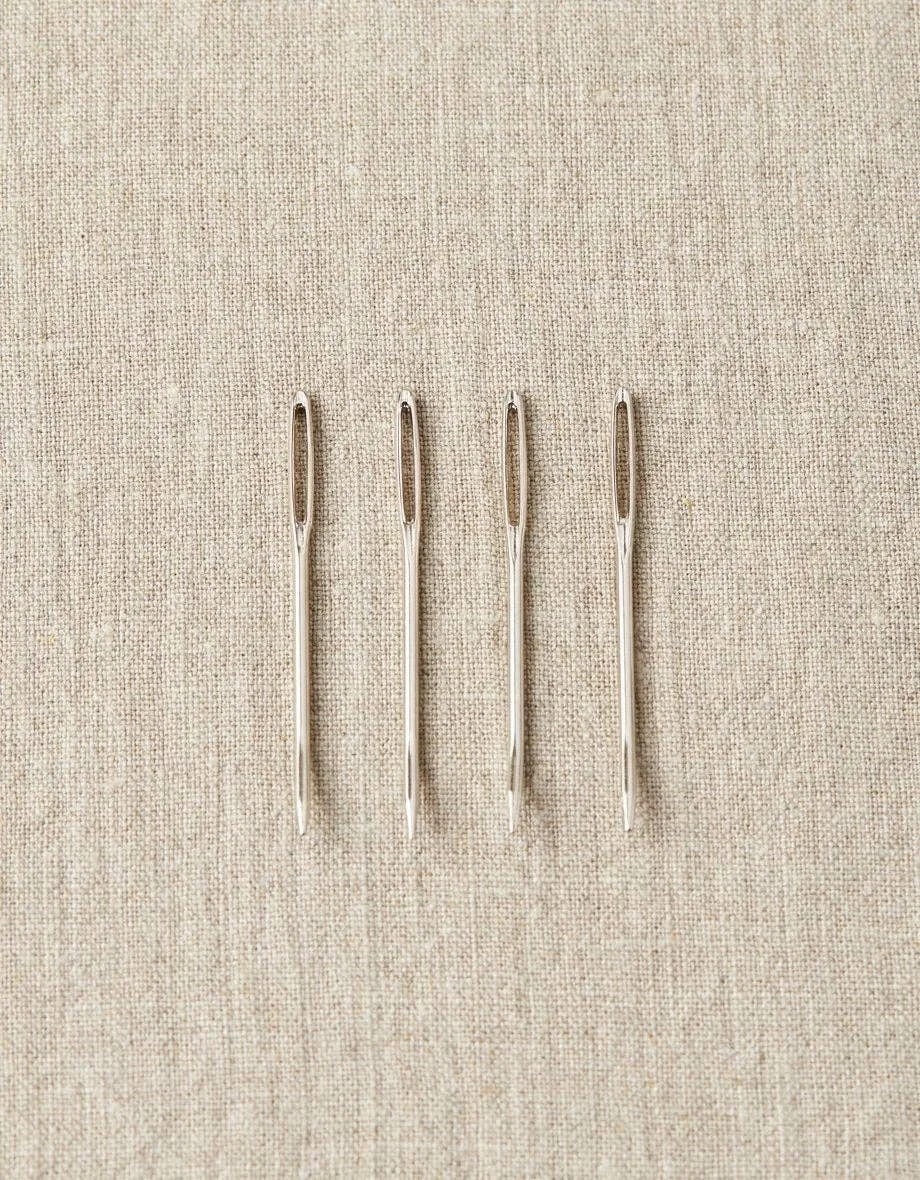
Weaving in ends: the method that holds up
- Split the plies when you can (especially on multi-ply yarns) so ends lock in.
- Change direction at least once to prevent ends from creeping out with wear.
- Weave after blocking when possible—blocking reveals the true fabric structure.
If finishing is your least favorite step, you’re not alone. The trick is to make it easy: keep your needles, markers, and a small snip tool in the same pouch so you can finish while watching a show.
Cable needles: who actually needs them?
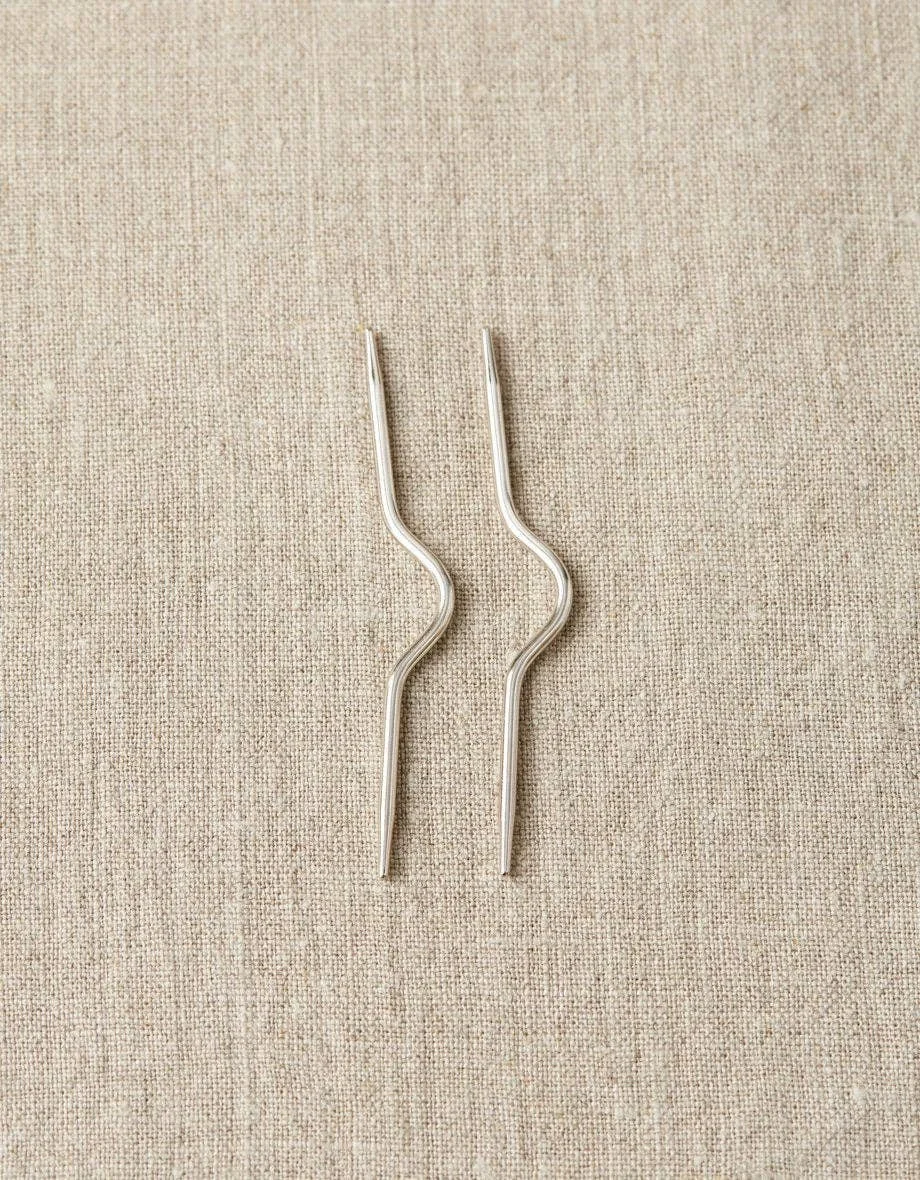
If you knit cables even occasionally, a curved cable needle is worth having. The curved shape helps keep stitches from sliding off, and it makes “pause-and-resume” cable knitting less stressful. If you’re a “cables once a year” knitter, this is still a small tool that prevents a big headache.
Blocking & garment care routines that make everything look better
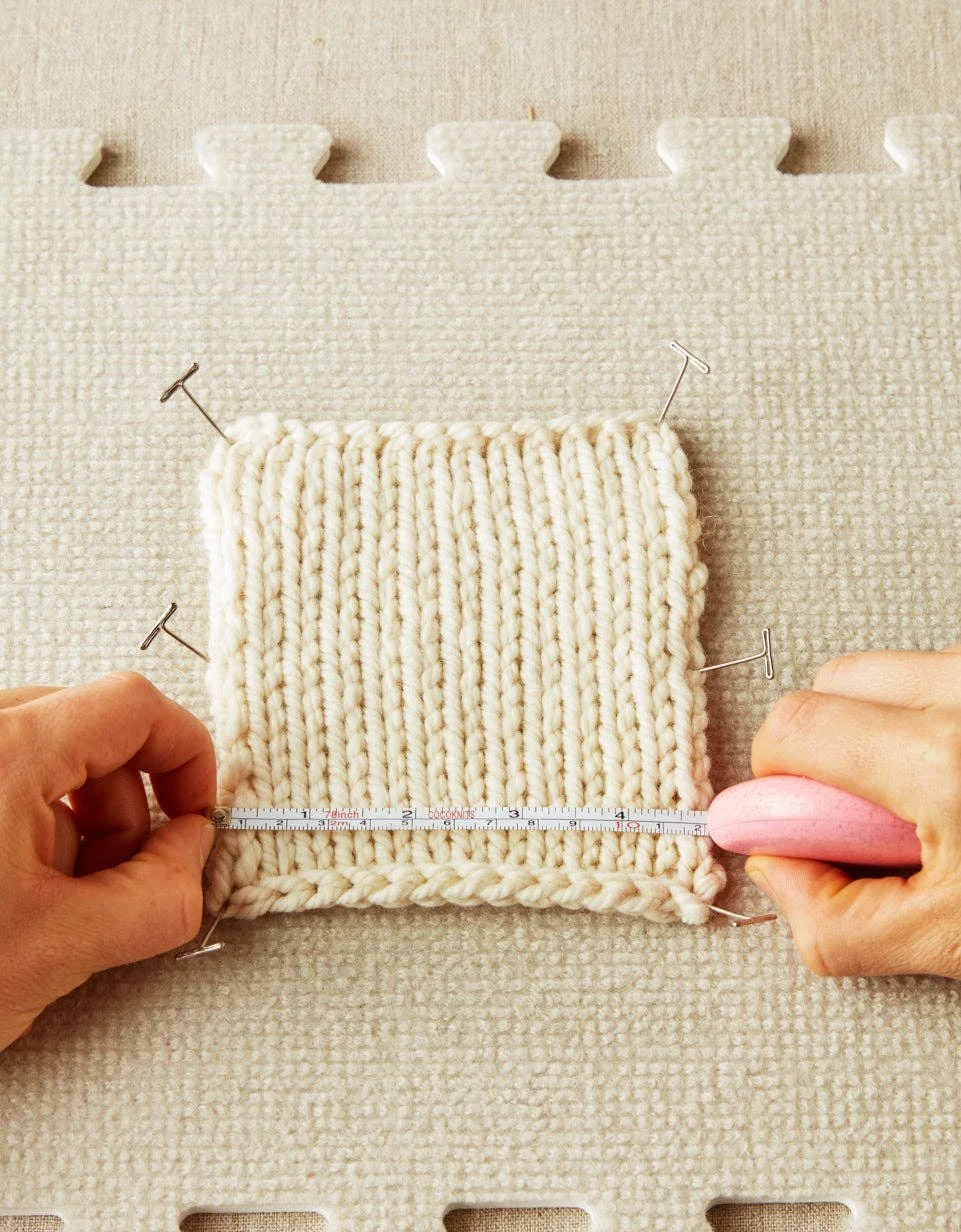
Blocking isn’t about making a project look “perfect.” It’s about letting the yarn relax into its intended fabric. The stitches even out, lace opens, edges behave, and the piece looks more like what you imagined when you cast on.
A gentle blocking approach for most projects
- Soak briefly (or steam carefully if the fiber allows).
- Press out water without twisting.
- Shape to measurements and pin if needed (especially for lace or edges).
- Let it dry completely before unpinning or trying on.
If you’re unsure how far to stretch or shape, bring your swatch or finished item to the shop. We’ll help you block for the look you want—not just the numbers.
Giftable Cocoknits-style bundles (that don’t feel like filler)
Notions are one of the best gifts for knitters because they’re useful across projects—especially when they’re well-made and well-organized. If you’re shopping for someone else (or building a “treat yourself” kit), here are bundles that feel thoughtful:
Bundle idea: “Sweater knitter starter kit”
- color-coded stitch markers
- gauge ruler/tool
- tapestry needle set
- sweater care bag set
Bundle idea: “Calm traveling WIP kit”
- markers in a contained case/tube
- stitch fixer tool
- tapestry needle set
- a small pouch (so it always stays together)
Want us to build a bundle for a specific knitter? Tell us what they make (socks, sweaters, crochet, shawls), and we’ll set you up. Start with Contact us for help / holds.
Get help in-store near Chicago: the AriYARN way 🧶
Tools are easier to choose when you can see them in your hands and talk through your project. AriYARN Shop & Studio is in Park Ridge, IL—near Chicago and O’Hare—so local makers can pop in for real-time help. If you’re visiting from out of town, we’re also a great stop for notions you’ll use long after the trip.
Thursday Stitch N’ Craft Night (5–7 PM)
If you’ve been wanting a low-pressure place to ask “quick questions” (like how to place markers for raglan increases, or how to pick up a dropped stitch), our free weekly Thursday meet-up is perfect. Bring your WIP, grab a seat, and leave with your project moving again.
Tip: If you’re shopping online, you can send us a quick note with your pattern name or yarn weight and we’ll help you pick the right markers, gauge tool, and finishing supplies.
